

What Are the Best Pet-Friendly Travel Tips?
Aug 09, 2026
For many people, pets are much more than animals.
Cats and dogs have become some of our closest companions, trusted friends, and important members of the family. Many pet owners consider their pets just as much a part of their household as human family members.
So it is no surprise that more and more people want to bring their furry friends along when they travel.
The travel industry has also started adapting to this growing demand. Today, many destinations offer pet-friendly hotels, outdoor activities, and travel services designed to make trips easier for both people and animals.
However, traveling with a pet requires more preparation than simply putting them in the car and heading out.
If you are wondering what are the best pet-friendly travel tips, the most important thing is planning ahead. From choosing the right transportation method to preparing for emergencies, small steps can make the entire experience safer and more enjoyable for both you and your pet.
1. Choose the Best Way to Travel With Your Pet
The first step in planning a pet-friendly trip is deciding how you will travel.
Different pets respond differently to transportation. Some dogs love car rides, while others become nervous or uncomfortable after only a short distance.
If your pet dislikes traveling by car and you are planning a long road trip, it is a good idea to help them slowly adjust before the actual journey.
Start with shorter drives and gradually increase the distance. This allows your pet to become familiar with the experience and reduces anxiety.
When traveling by car, always make sure your pet has a safe and comfortable place to sit. A pet seat belt, carrier, or secure crate can help prevent injuries and keep your pet protected.
If your pet experiences motion sickness, traveling with an empty stomach may help. However, every pet is different, so paying attention to your veterinarian’s advice is important.
Remember that traveling with pets usually takes longer than traveling alone. You will need extra stops for bathroom breaks, water, movement, and rest.
2. Choose the Right Pet Stroller for Convenient Travel
For pet owners who want more flexibility during trips, a pet stroller can be a very helpful travel companion.
A quality pet stroller allows you to bring your pet along while reducing physical strain, especially during long-distance walks or sightseeing trips.
Instead of carrying your pet for hours, you can simply push the stroller and let your furry friend enjoy the surroundings comfortably.
Before choosing one, consider your pet’s size, weight, and comfort needs. A good stroller should provide enough space, ventilation, safety features, and easy handling.
A practical guide to choosing the right option can help pet owners understand what features matter most when selecting a stroller for everyday use and travel.
One example is the Pet Stroller for Medium Dogs with Canopy, which is designed for small to medium dogs and cats.
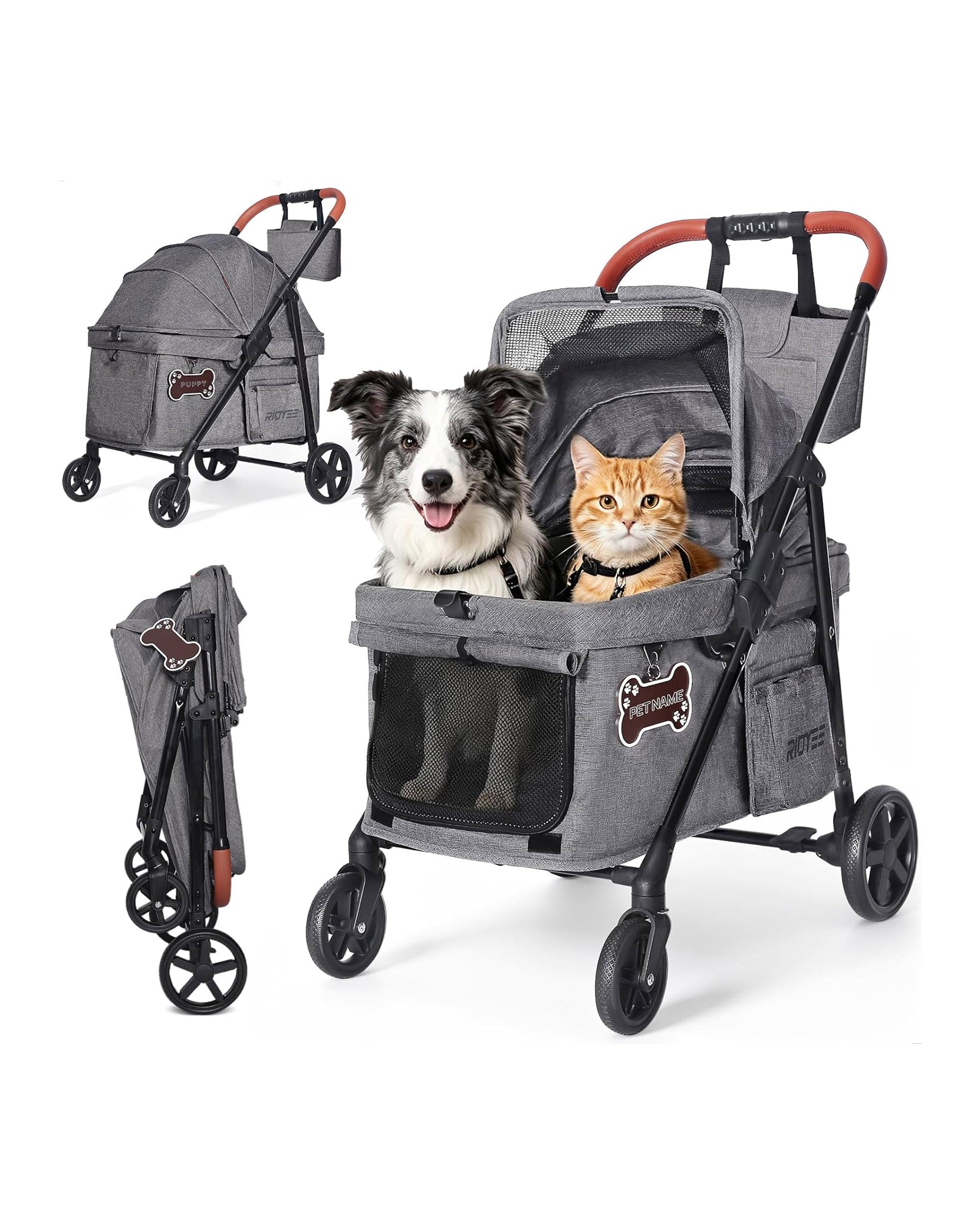
Its features include:
- A one-hand folding system that makes it easy to store in a car trunk;
- A lightweight but durable frame suitable for travel;
- Breathable mesh windows to keep pets cool and comfortable;
- Safety features including rear brakes and an internal leash;
- Support for pets up to 44 pounds (around 20 kg);
- All-terrain wheels for smoother movement on sidewalks, grass, and uneven surfaces;
- Extra storage space with a basket and cup holder for carrying travel essentials.
A well-designed stroller can make exploring new places easier while helping pets stay comfortable throughout the journey.
3. Practice Short Trips Before Long Travel
Before starting a long vacation, help your pet develop positive experiences with traveling.
Short trips allow pets to become familiar with new environments and build confidence before facing a longer journey.
Try taking your pet on small adventures first:
- A short drive around the neighborhood;
- A visit to a nearby park;
- A quick trip to a pet-friendly location.
During these practice trips, bring familiar items such as their favorite toy, blanket, or treats.
Familiar smells and objects can help pets feel more relaxed when everything around them is new.
A gradual approach can make the difference between a stressful trip and a comfortable one.
4. Prepare Emergency Veterinary Information
One of the most important pet-friendly travel tips is preparing for unexpected situations.
Before leaving, research veterinary clinics, emergency animal hospitals, and pet resources near your destination.
Having this information ready can save valuable time if your pet becomes sick or injured during the trip.
You should also bring copies of important veterinary records.
These may be needed if you visit a local veterinarian, use a pet daycare service, or stay at a pet-friendly hotel that requires health information.
A little preparation before departure can give you peace of mind while traveling.
5. Make Sure Your Pet Has Proper Identification
Keeping your pet properly identified is essential whenever you travel.
New environments can be overwhelming, and even normally calm pets may become frightened and run away.
Start by making sure your pet wears an identification tag with your phone number and home address.
For longer trips, some owners also use temporary tags that include the address and contact information of their hotel or vacation rental.
Microchipping is another important safety step.
Unlike a collar tag, a microchip provides permanent identification and can greatly improve the chance of being reunited with your pet if they become lost or escape.
Before traveling, check that your contact information connected to the microchip is up to date.
6. Schedule Regular Breaks During Travel
Long journeys can be tiring for pets, just like they can be tiring for people.
If you are driving long distances, plan regular stops every few hours so your pet can:
- Use the bathroom;
- Drink water;
- Stretch their legs;
- Release some energy.
Try to avoid making travel days excessively long. Keeping daily driving time reasonable can help reduce stress.
Many rest areas across the country now offer dog parks or enclosed pet areas where animals can safely move around.
These breaks are not only about physical needs. They also help pets stay calmer and more comfortable during the rest of the journey.
7. Prioritize Pet Safety Throughout the Trip
The most important rule when traveling with pets is always putting their health and safety first.
Never leave a pet alone in a hot car or unsafe environment, even for a short period of time. Temperatures inside vehicles can become dangerous quickly.
Always provide:
- Fresh water;
- Shade or proper shelter;
- Comfortable resting areas;
- Necessary medications.
You should also include regular exercise and playtime in your travel schedule.
A pet that gets enough movement is often calmer and easier to manage because exercise helps reduce excess energy and stress.
Bring extra supplies whenever possible, especially medications, food, waste bags, and familiar comfort items.
Unexpected delays happen, and having additional supplies can prevent unnecessary problems.
Final Thoughts: Enjoy Traveling With Your Pet
Traveling with a pet may require extra planning, but the experience can create unforgettable memories.
The key is preparation.
Choose a travel method that matches your pet’s personality, introduce them to travel gradually, bring the right equipment, and always pay attention to their needs.
A comfortable pet is more likely to enjoy the journey, and a prepared owner can focus more on enjoying the adventure.
With patience, flexibility, and thoughtful planning, you and your furry companion can safely explore new places together and create wonderful travel experiences.
FAQs About Pet-Friendly Travel
1. What is the most important thing to prepare before traveling with a pet?
The most important preparation is making sure your pet is safe and comfortable during the journey. This includes choosing the right transportation method, preparing supplies, and having emergency veterinary information available.
2. Are pet strollers useful for travel?
Yes, pet strollers can make traveling easier, especially during long walks, sightseeing, or trips where pets may become tired. They provide a comfortable way for pets to rest while allowing owners to continue exploring.
3. How can I help my pet get used to traveling?
Start with short trips before attempting longer journeys. Bringing familiar toys, blankets, and treats can also help pets feel more secure in new environments.
4. Should I bring my pet’s medical records when traveling?
Yes. Keeping copies of veterinary records can be helpful if your pet needs medical attention or if a hotel or pet service requires health information.
5. How often should pets take breaks during a road trip?
Most pets benefit from regular stops every few hours for water, bathroom breaks, and movement. The exact timing depends on your pet’s age, health, and comfort level.

