

Balance Bike vs Training Wheels: Which One Is Better for Teaching Kids to Ride?
Aug 02, 2026
I still remember watching a little boy learn to ride his first bike. He had a helmet sitting slightly crooked on his head, his tiny hands holding the handlebars, and a serious look on his face like he was preparing for the biggest challenge of his life.
His parents had added training wheels to his bike. At first, he loved it. He could pedal around the driveway, make turns, and feel like a real cyclist. But a few weeks later, when the training wheels came off, everything changed. Suddenly, the skill he needed most wasn’t pedaling. It was balance.
That’s the moment many parents start wondering about the difference between a balance bike vs training wheels.
For generations, training wheels were the traditional way children learned to ride. Many parents today remember their own childhood experience: a small bicycle, two extra wheels on the back, a push from a parent, and plenty of practice in a quiet neighborhood.
But the way kids learn has changed. More families are choosing balance bikes because they focus on the foundation of cycling from the very beginning — balance, control, and confidence.
So, when it comes to balance bike vs training wheels, which one is the better choice? The answer depends on your child, but understanding how each method works can make the decision much easier.
What Are Training Wheels?
Training wheels are small support wheels attached to both sides of a traditional bicycle’s rear wheel. They are designed to keep the bike upright while children learn how to pedal, steer, and move forward.
For many kids, training wheels create an immediate sense of achievement. They can climb onto a bike, start pedaling, and move around without worrying about falling over.
And honestly, that confidence boost can be wonderful. Some children are naturally cautious, and having extra support helps them feel comfortable trying something new.
However, training wheels also change the way children experience riding. Because the bike stays upright with the help of the extra wheels, children do not need to develop the same balancing skills they would need on a two-wheel bicycle.
When the training wheels are eventually removed, many children face a second learning stage. They already understand pedaling, but now they have to figure out how to keep the bike balanced.
Some children adjust quickly. Others need more time and encouragement.
What Is a Balance Bike?
A balance bike is a two-wheel bicycle without pedals, gears, or a chain. Instead of learning to pedal first, children learn how to balance, steer, and control their movement.
The process is usually very natural. A toddler starts by sitting on the seat and walking with the bike. Then they begin taking bigger steps, pushing forward, and gliding for short distances.
Then one day, something surprising happens.
Their feet lift off the ground.
They are riding.
Many parents love this moment because it feels like their child discovered the skill on their own. There is no need for constant pushing or holding onto the back of the bike. The child learns through movement and exploration.
A balance bike works well with the way toddlers already understand their bodies. They know how to walk, stop, and use their feet for control, so the bike becomes an extension of those abilities.
A simple balance bike can help young riders focus on developing these important skills before adding pedals.
For families looking for a bike that combines comfort and durability, the RIDYEE Toddler Sport Balance Bike with Footrest is designed for children ages 2–5.
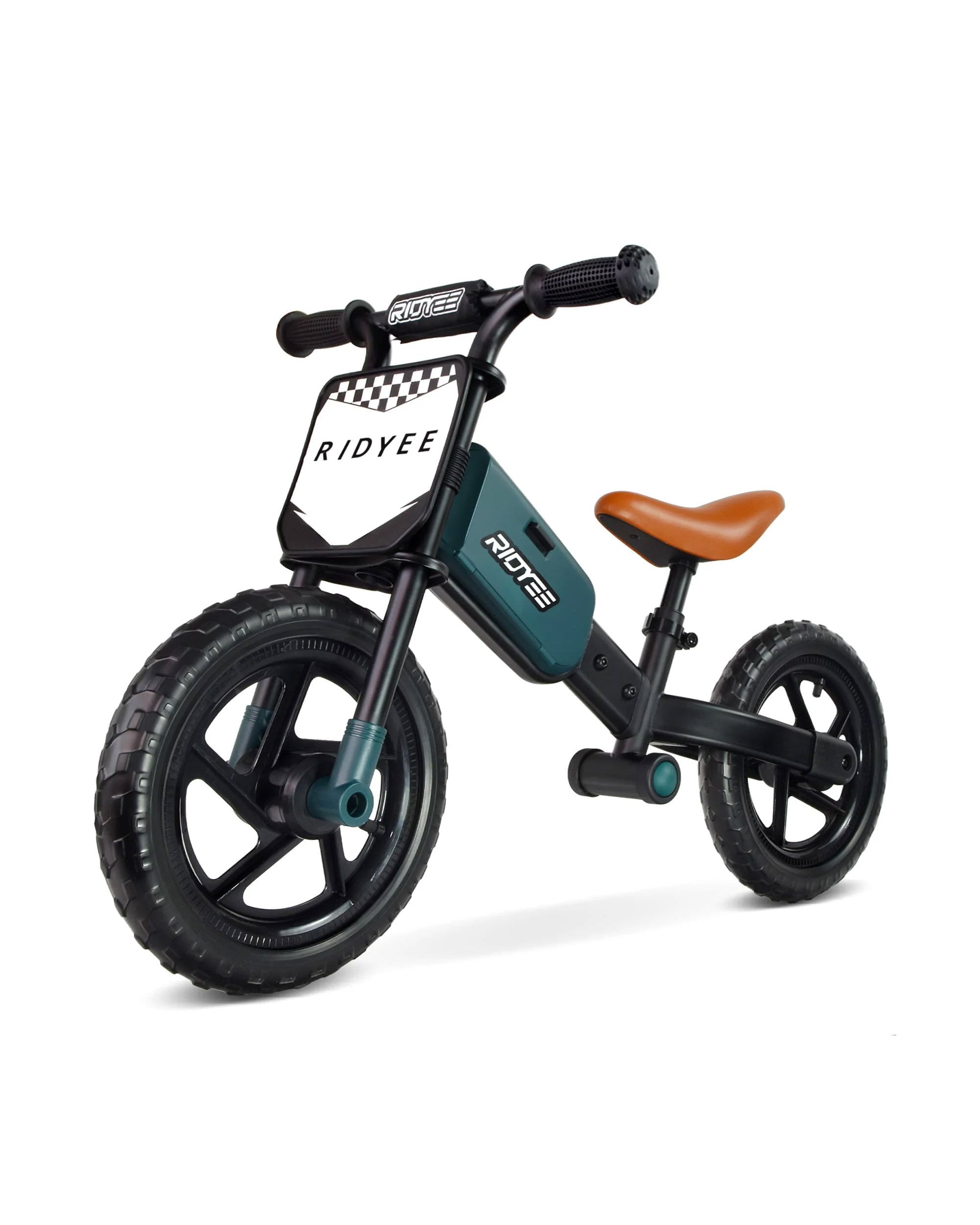
The adjustable seat height, ranging from 13.4 inches to 15.8 inches, allows children to maintain a comfortable riding position as they grow. The carbon steel frame provides a sturdy structure for everyday adventures, while all-terrain tires make it suitable for both indoor and outdoor riding.
Small details can also make a big difference for toddlers. The customizable footboard and alphabet stickers allow children to personalize their bike, making riding feel more exciting and personal.
For a young child, a bike is not just a tool for learning. It becomes something they enjoy, something they recognize as their own.
Balance Bike vs Training Wheels: Why Balance Often Comes First
When comparing balance bike vs training wheels, the biggest difference is the order in which children learn skills.
Training wheels usually teach children how to pedal first.
Balance bikes teach children how to balance first.
And balance is the foundation of riding.
Children learn the hardest skill first
A bicycle requires several skills at the same time. Children need to control their body position, steer in the right direction, manage speed, and stay upright.
For many beginners, balance is the most challenging part.
A balance bike removes pedals from the equation, allowing children to focus only on controlling the bike. They can practice leaning, turning, stopping, and changing direction without worrying about coordinating their feet with pedals.
This often makes the learning process feel less overwhelming.
Instead of an adult telling them what to do every second, children begin understanding how their own movements affect the bike. They learn through trial and adjustment.
That feeling of control can make a huge difference.
Balance bikes help build confidence
Confidence is a big part of learning any new physical skill.
A child riding a balance bike gets to make decisions independently. They choose when to move faster, when to slow down, and when to stop.
That independence creates a sense of ownership.
Many parents notice that children who are hesitant at first become much more willing to experiment after a few rides. They learn that small mistakes are part of the process.
Of course, safety still matters. A properly fitted helmet, supervision, and a safe riding area are important whether your child uses a balance bike or training wheels.
Balance bikes encourage active play
A balance bike is not only about preparing for a pedal bike. It also encourages children to move more.
Riding a balance bike helps develop leg strength, coordination, and body awareness. It gives toddlers a reason to spend time outside, explore their surroundings, and practice physical skills while having fun.
For many families, a balance bike becomes part of everyday play. A quick ride around the driveway can become a favorite afternoon activity.
Why Some Parents Still Choose Training Wheels
Although balance bikes have become more popular, training wheels are still a reasonable option for many families.
They are familiar, easy to understand, and they have helped millions of children learn to ride.
Here are some reasons parents may still choose them.
They work with a bike you already own
If your child already has a properly sized pedal bike, adding training wheels may be the simplest solution.
Parents do not need to purchase another bike, and children can start practicing immediately.
For families who already have a bicycle at home, this can be a practical choice.
They provide extra stability
Some children feel nervous when learning new activities. Training wheels can provide a sense of security because the bike will not tip over easily.
For a child who needs extra time building confidence, that support can make riding feel less intimidating.
They may work better for older beginners
Not every child is interested in cycling at the same age.
Some children begin riding later, and parents may find it easier to choose a traditional bike with training wheels for an older or taller child.
The most important thing is choosing an option that makes your child excited to practice.
The Final Choice: Balance Bike or Training Wheels?
When deciding between a balance bike vs training wheels, there is no perfect answer for every child.
Training wheels can help children feel successful quickly. They allow kids to pedal, ride, and enjoy the experience without worrying too much about falling.
However, balance bikes have one major advantage: they teach children the skill that makes cycling possible in the first place.
By learning balance, steering, and control before pedals are introduced, many children find the transition to a regular bicycle smoother.
For toddlers and preschoolers, especially ages 2–5, a balance bike can be a great way to develop confidence while learning essential riding skills.
The best choice is the one that matches your child’s personality and keeps them excited to ride. After all, the goal is not just learning how to ride a bike.
The goal is helping your child love riding.
FAQs About Balance Bike vs Training Wheels
1. What age can a child start using a balance bike?
Many children can begin using a balance bike around 18 months to 2 years old. The most important thing is that they can comfortably sit on the bike and place both feet on the ground.
2. Do children need training wheels after using a balance bike?
Many children can move directly from a balance bike to a pedal bike without training wheels. Since they already understand balance and steering, they often only need to learn how to pedal.
3. Are balance bikes safer than training wheels?
Both options can be safe when children use helmets and ride in suitable areas. Balance bikes may help children develop bike control earlier because they practice balancing from the start.
4. How long should a child use a balance bike?
There is no fixed timeline. Some children move to a pedal bike after a few months, while others enjoy their balance bike for a year or longer.
5. Can a 4-year-old still learn on a balance bike?
Yes. A four-year-old can still benefit from a balance bike, especially if they have little previous riding experience. Choosing a bike with adjustable sizing can help ensure a comfortable fit.

