

Balance Bike Size Guide: How to Choose the Right Fit for Your Child
Jul 25, 2026
Choosing a balance bike for your child may seem simple at first. After all, there are no pedals, gears, or complicated parts to worry about. But when it comes to finding the right size, many parents quickly discover that the decision is not as straightforward as it looks.
Should you choose based on your child’s age? Height? Wheel size?
The truth is that a properly sized balance bike is about much more than numbers on a chart. The right fit helps children feel comfortable, stay in control, and develop the confidence they need while learning to ride.
This balance bike size guide will walk you through the most important measurements, explain what makes a bike fit correctly, and help you choose a balance bike that supports your child’s riding journey.
Why Balance Bike Size Matters

A balance bike that does not fit properly can make learning more difficult.
When a bike is too large, children may struggle to control it. They may feel unstable because their feet cannot reach the ground comfortably.
When a bike is too small, children may feel cramped and unable to develop a natural riding position.
The right size balance bike can help children:
- Build confidence while practicing
- Maintain better control
- Reduce the risk of falls caused by poor fit
- Develop proper balance and riding posture
- Prepare for riding a pedal bike in the future
One common mistake parents make is choosing a balance bike only based on age. While age recommendations can provide a general starting point, children of the same age can have very different heights and leg lengths.
A better approach is measuring your child’s inseam and comparing it with the bike’s seat height range. Parents who are just beginning their search can first understand general age expectations through resources about what age is best for a balance bike, then focus on finding the right fit.
Start With Balance Bike Geometry
Before looking at colors or extra features, consider the overall geometry of the bike.
Bike geometry includes:
- Frame size and shape
- Riding position
- Handlebar height
- Wheel size
- Tire width
These elements work together to determine how comfortable and easy the bike feels.
For young riders, the goal is not simply finding the biggest bike they can use. The goal is finding a bike that allows them to move naturally.
A well-fitting balance bike should allow children to:
- Sit comfortably
- Place both feet firmly on the ground
- Move easily while walking or gliding
- Turn and steer without difficulty
A good fit allows children to focus on learning balance instead of struggling with the bike itself.
Step One: Measure Your Child’s Inseam
The most important measurement for choosing a balance bike is often your child’s inseam length.
The inseam is the distance from the inside of your child’s leg to the ground.
To measure accurately:
- Have your child stand straight with their feet slightly apart.
- Place a hardcover book between their legs.
- Gently push the book upward until it touches the child’s upper leg area.
- Measure from the floor to the top of the book.
This measurement gives you a better idea of the seat height your child needs.
Many parents rely only on visual estimates, but this can lead to choosing a bike that feels too large or too small. Accurate measurement helps prevent buying a bike that looks right but does not actually fit.
Step Two: Check the Minimum Seat Height
Once you know your child’s inseam, compare it with the balance bike’s minimum seat height.
Ideally, the lowest seat setting should be slightly shorter than your child’s inseam.
When sitting on the balance bike, your child should be able to:
- Place both feet flat on the ground
- Keep their knees slightly bent
- Push forward comfortably
- Stop easily when needed
This position gives children the control they need when learning.
As your child grows, the seat height can gradually increase to maintain a comfortable riding posture.
How to Tell If a Balance Bike Fits Correctly
A correctly sized balance bike should feel natural when your child rides.
Here are some signs of a good fit:
Feet can reach the ground
Your child should not need to stretch their toes or lean awkwardly to touch the ground.
Arms are relaxed
The handlebars should be positioned so your child can steer comfortably without reaching too far.
Knees stay slightly bent
A small bend in the knees allows children to push, glide, and control their movement.
Body position feels balanced
Children should lean slightly forward while keeping control of the bike.
If you are shopping before your child tries the bike, compare their inseam measurement with the manufacturer’s recommended seat height range.
What Type of Balance Bike Should I Choose?
For most children, you do not need the most expensive balance bike.
Balance bikes have fewer moving parts than traditional bicycles, so a simple, lightweight, and properly sized model is often the best choice.
The most important things to look for are:
- Correct seat height
- Comfortable riding position
- Appropriate weight
- Durable frame
- Easy handling
A bike that fits your child well will usually provide a better learning experience than a bike with extra features that does not match their size.
Recommended Balance Bike: RIDYEE Toddler Balance Bike With Name Plate
For children who are ready to explore riding between ages 2 and 5, a balance bike with adjustable sizing and personalization features can be a practical choice.
RIDYEE Toddler Balance Bike With Name Plate
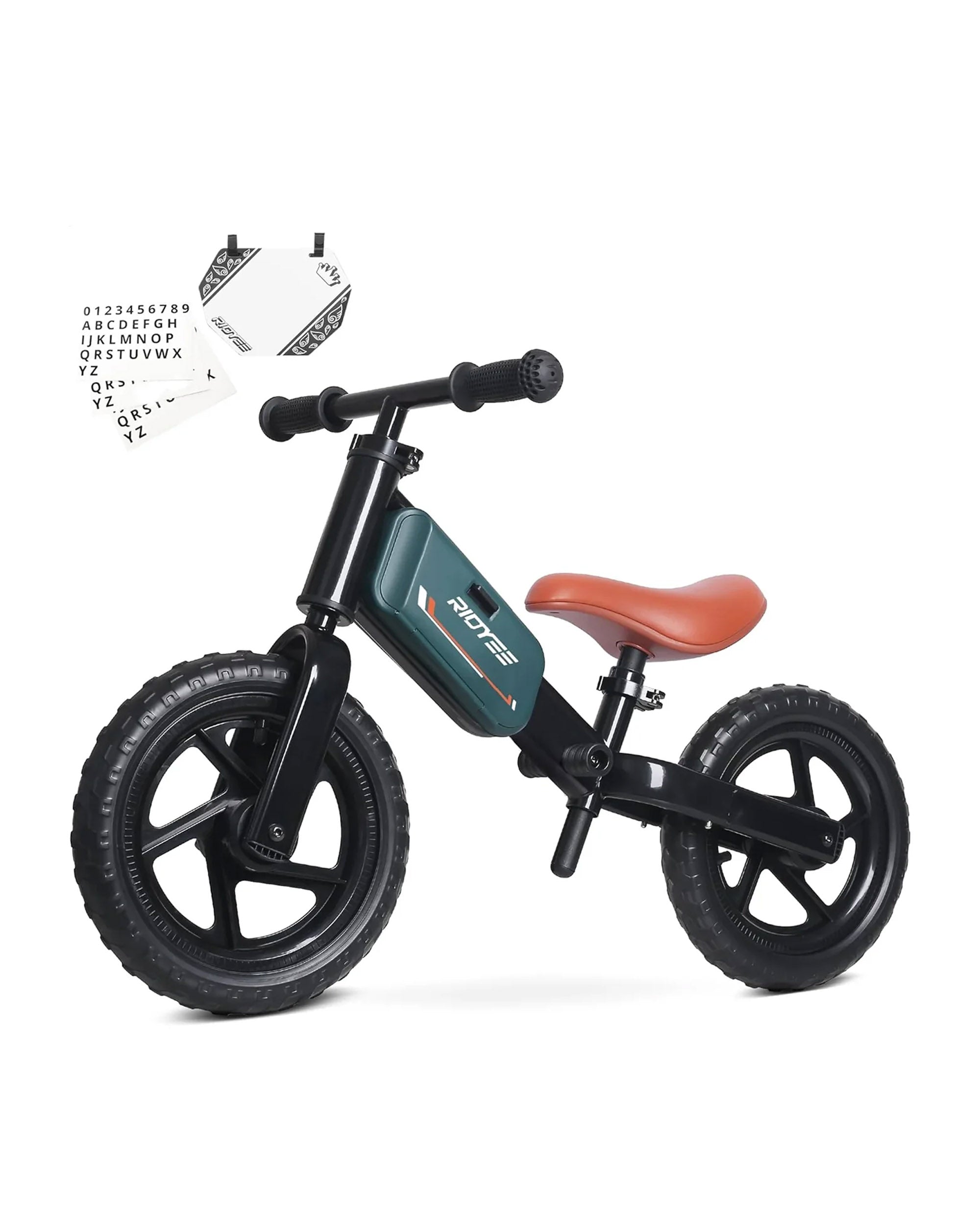
Key features:
Adjustable seat height
The seat can be adjusted from 13.4 inches to 15.8 inches, helping the bike adapt as children grow.
Designed for growing toddlers
The size and structure are created for young riders developing balance and coordination skills.
Personalized design options
A customizable plate and three sets of letter and number stickers allow children to create a bike that feels unique to them.
Durable carbon steel frame
The sturdy frame provides reliable support for everyday riding.
Comfortable and stable riding experience
Features such as a shock-absorbing seat and all-terrain tires help children ride more comfortably indoors and outdoors.
This type of balance bike can be a good fit for families looking for a model that combines size adjustability with opportunities for creative expression.
Parents’ Role in Helping Kids Learn to Ride
Choosing the right size balance bike is only the beginning.
Children also need encouragement and a safe environment where they can practice.
Parents can support their child’s riding journey by:
Celebrating small progress
Learning balance takes time. Celebrate moments like the first successful glide, better steering, or improved confidence.
Creating a safe practice area
Choose places without traffic, steep slopes, or obstacles.
Avoid areas with loose gravel or deep sand because these surfaces can make balancing more difficult for beginners.
Staying patient
Some children learn quickly, while others need more time.
The goal is not to rush the process. It is to help children enjoy riding and feel confident trying something new.
Common Balance Bike Size Mistakes Parents Make

Even with good intentions, parents often make a few common sizing mistakes.
Choosing by age only
Age ranges are helpful, but they do not account for differences in height and leg length.
Buying a bike to “grow into”
A bike that is too large may feel intimidating and difficult to control.
Ignoring seat height
Wheel size alone does not determine whether a balance bike fits.
Forgetting bike weight
A heavy bike can be difficult for a small child to handle.
The best balance bike is one that fits your child today while offering enough adjustment for future growth.
FAQs About Balance Bike Size
1. What size balance bike does my child need?
The best size depends on your child’s inseam and the bike’s minimum seat height. Measuring leg length is usually more accurate than choosing by age alone.
2. Is age a good way to choose a balance bike size?
Age can provide a general guideline, but children grow at different rates. Height and inseam measurements are more reliable.
3. Should my child’s feet touch the ground on a balance bike?
Yes. Beginners should be able to place both feet flat on the ground while sitting on the bike.
4. Can my child use a larger balance bike and grow into it?
It is usually better to choose a bike that fits now. A bike that is too large can make learning balance and control more difficult.
5. How long can a child use a balance bike?
A properly sized balance bike with adjustable seat height can often support children through multiple stages of growth, depending on their size and riding ability.

