

Balance Bike or Tricycle: Which First Ride Is Right for Your Child?
Jul 20, 2026
I still remember the first time my toddler grabbed a little bike and looked at me like he was ready to take on the whole neighborhood.
He wasn’t actually ready, of course. His helmet was slightly crooked, his feet were still figuring out where to go, and he spent more time pushing than riding. But that little moment felt huge. Watching a child discover independence — moving by themselves, making choices, exploring the world — is one of those parenting memories that sticks with you.
When parents start looking for their child’s first ride-on bike, one question comes up again and again: Balance Bike or Tricycle — which one should we choose?
Honestly, there isn’t one perfect answer. Both balance bikes and tricycles can help children build confidence and develop important motor skills. The better choice depends on your child’s age, personality, physical development, and where they’ll actually be riding.
Let’s look at what each option teaches and how to decide which one fits your little rider.
Balance Bike or Tricycle: What Does Each One Teach?
 At first glance, a balance bike and a tricycle may seem similar. Both have wheels, both encourage outdoor play, and both help children become comfortable with movement.
A balance bike focuses on the hardest part of learning to ride a bicycle: balance.
Children learn how to:
- Balance their body while moving
- Control speed with their feet
- Turn and steer at different speeds
- Understand how their body affects direction
- Read different surfaces, including small slopes, bumps, and curbs
The goal is not simply getting from one place to another. It’s teaching children how riding works.
Many parents are surprised by this. A balance bike doesn’t have pedals, so it can look like a simpler toy. But that simplicity is exactly what helps children focus on balance first. Learning how to use one can take more patience at the beginning, but learning to ride a balance bike often creates a smoother transition to a pedal bike later.
A tricycle teaches a different set of skills.
Children learn:
- Pedaling movement
- Basic steering control
- Leg strength
- Independent movement
- Confidence from being able to move on their own
For many toddlers, a tricycle feels more immediately successful. They sit down, push the pedals, and suddenly they’re going somewhere. That first feeling of “I’m doing it!” can be incredibly exciting.
Compared with balance bikes, learning how to ride a tricycle is usually easier for younger children because the three wheels provide natural stability.
Consider Your Child’s Physical Development
Every child develops differently, and this matters more than following a specific age recommendation.
Before choosing between a balance bike and a tricycle, take a look at your child’s current abilities.
Can they walk confidently? Do they enjoy climbing, running, and moving independently? Do they seem comfortable standing on one foot or maintaining their balance?
If your child already has good coordination and enjoys physical challenges, a balance bike may be a great match. It gives them room to experiment and gradually develop control.
On the other hand, if your child still needs more stability, a tricycle may provide a more comfortable starting point.
Some toddlers need a little more time before they feel confident balancing. That’s completely normal. The first ride should feel exciting, not frustrating.
You know your child better than anyone. The right choice is the one that makes them want to keep trying.
Personality Matters More Than Parents Expect

Something many parents don’t consider is personality.
Two children the same age can have completely different reactions to their first bike.
One child may run toward a balance bike immediately, pushing faster and faster because they love adventure. Another child may look at it carefully and think, “I’m not sure about this yet.”
And honestly? Both reactions are normal.
A confident, adventurous child may enjoy the freedom of a balance bike. They often like the feeling of controlling their speed and exploring independently.
For parents who want extra control, some tricycles come with removable push handles. These allow parents to guide direction, keep younger riders close, and provide support when needed. A well-designed multi-function tricycle can grow with your child through different stages of riding.
For families who want something that combines riding with everyday convenience, choosing a comfortable stroller trike can also be a practical option for longer outings.
The most important thing is not whether your child starts with two wheels or three wheels. It’s whether they feel happy and confident while learning.
Where Will Your Child Actually Ride?
This question is easy to overlook.
Parents often imagine their child riding everywhere, but the real environment makes a big difference.
Think about where your child will use their bike most often.
If you have:
- A neighborhood sidewalk
- A driveway
- A large backyard
- Parks with different surfaces
A balance bike may be a great choice. It allows children to explore different terrain and practice controlling their movement.
Balance bikes are especially fun for children who enjoy going a little faster, turning around obstacles, and discovering how their body works with the bike.
But if your child mostly rides:
- Indoors
- On smooth floors
- On flat sidewalks
- Around the house or patio
A tricycle may make more sense.
The stability of three wheels makes it easier for toddlers to enjoy short rides without needing as much balance control.
Sometimes the best bike isn’t the one with the most advanced features. It’s the one that fits the places where your child actually plays.
Featured Product
Toddler Balance Bike with Name Plate
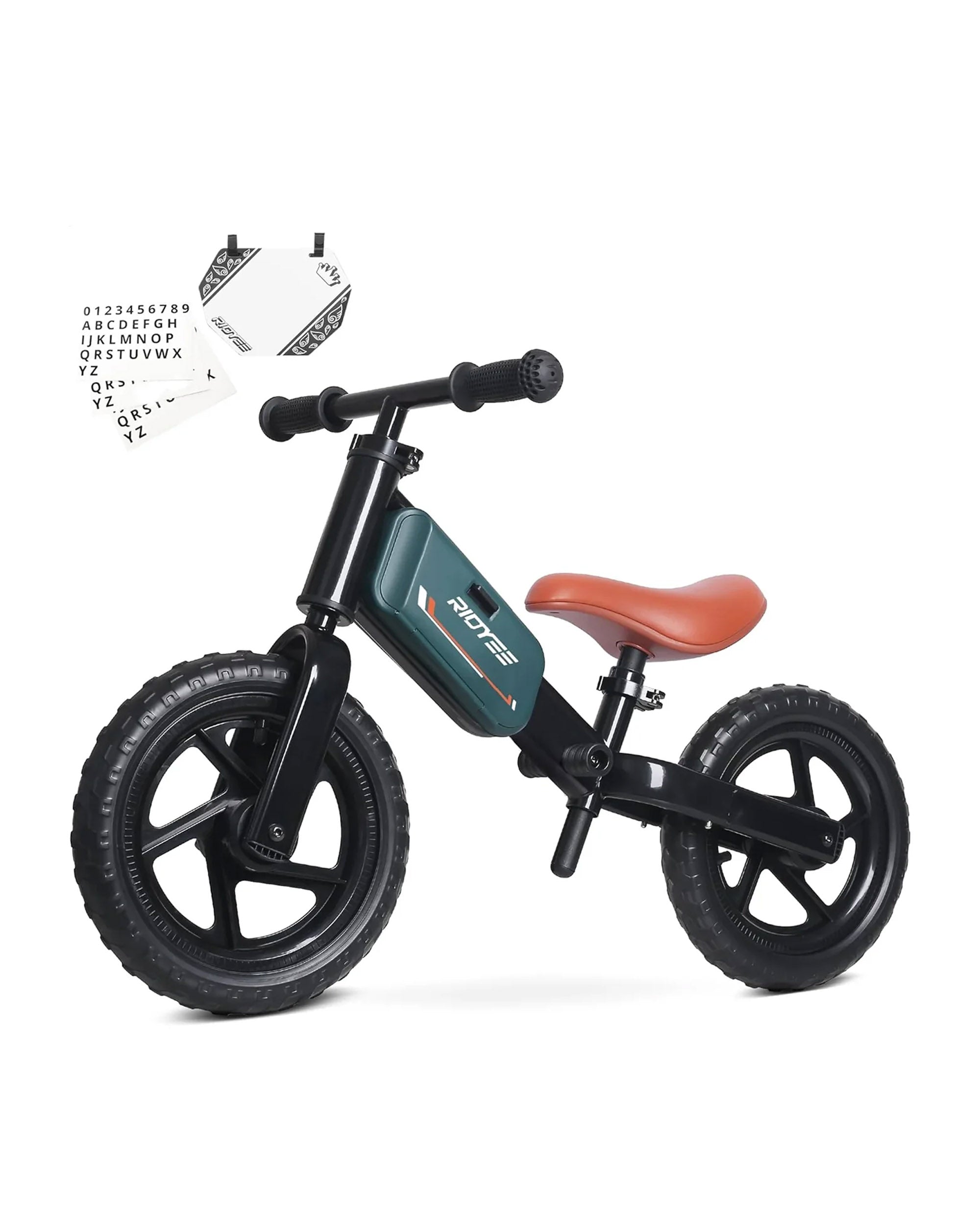
Designed for children ages 2–5, this balance bike combines style, comfort, and safety with features parents appreciate:
- Durable carbon steel frame inspired by off-road bikes
- Tool-free adjustable seat (13.4"–15.8") that grows with your child
- Customizable name plate with letter and number stickers
- Safety steering limiter to help prevent over-rotation
- Shock-absorbing seat and all-terrain tires for smoother rides
- Helps develop balance, coordination, and leg strength indoors or outdoors
It's an excellent first bike for children learning the basics of independent riding.
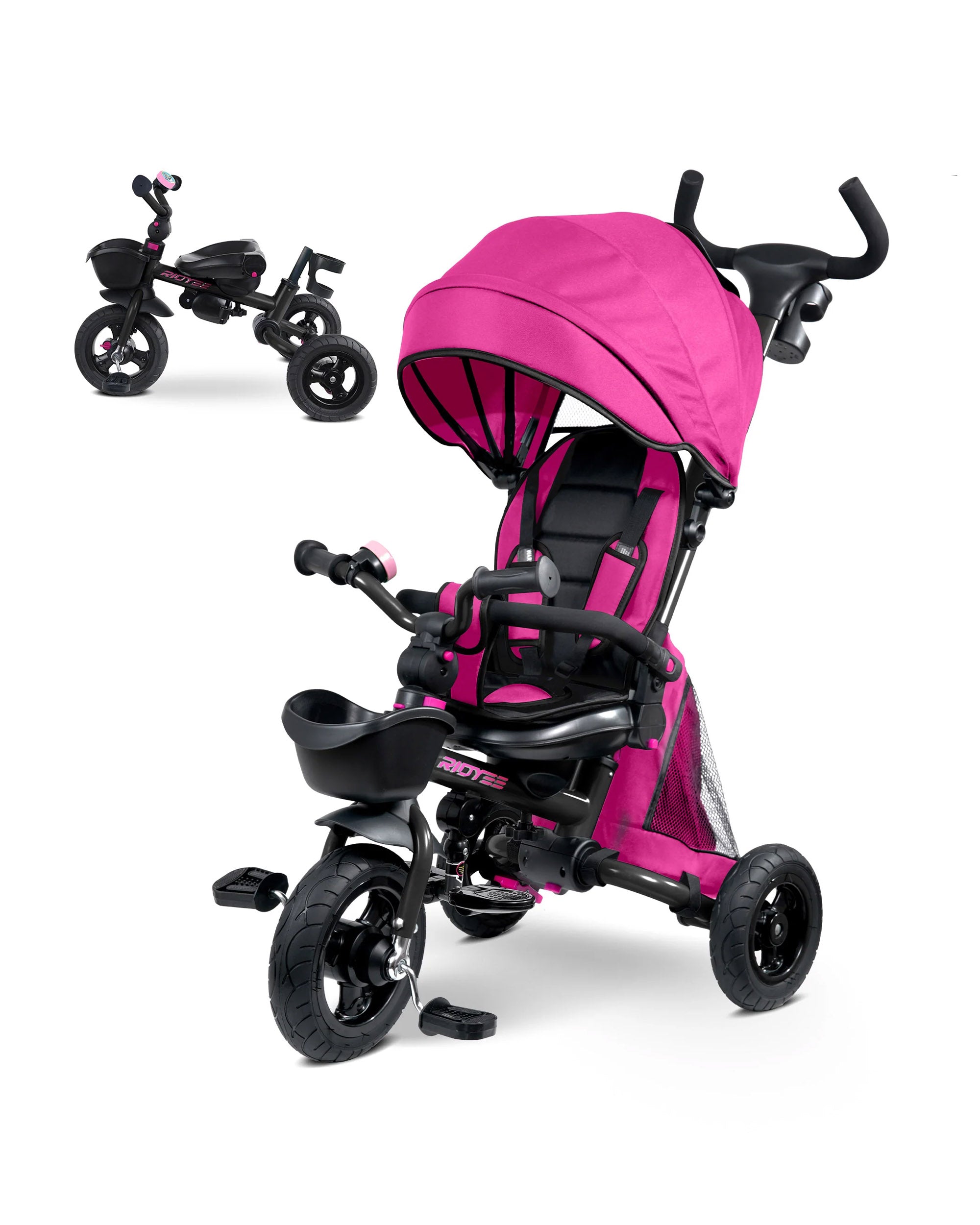
Price: $135.99
Why parents like it
- 7-in-1 adjustable riding modes adapt from parent-controlled strolling to independent riding.
- Designed for children 18 months to 5 years old for long-term use.
- Lockable pedals and steering system give parents full directional control when needed.
- Three-point safety harness and removable guardrails improve safety during rides.
- Adjustable seat positioning and reclining backrest improve comfort for longer outings.
- Ergonomic adjustable push handle feels easier on parents during extended walks.
- Retractable canopy and rear viewing window add convenience and ventilation.
- Large all-terrain rubber tires create smoother rides on sidewalks, parks, and uneven surfaces.
And honestly, the rubber tires make a noticeable difference. Parents who regularly walk outdoors or on rougher pavement usually appreciate the smoother handling immediately.
Think About Long-Term Use and the Next Step
Another thing parents naturally wonder about is how long the bike will last.
A tricycle usually has a shorter learning window. Once children develop stronger balance skills, they often move on to a bicycle.
A balance bike, however, can create a direct path toward riding a pedal bike without training wheels.
Many children who learn balance first find the transition easier because they already understand steering, body position, and controlling speed.
But that doesn’t mean every child needs a balance bike right away.
Some children benefit from starting with a tricycle because it builds confidence and excitement around riding. A child who loves their first tricycle may be more interested in trying a balance bike later.
The goal isn’t to rush the process.
A four-year-old who learns to ride a two-wheel bicycle early isn’t automatically better prepared than another child who takes a little longer. Children also need time to learn safety awareness, judgment, and how to navigate their surroundings.
Choosing Your Child’s First Ride
 So, Balance Bike or Tricycle?
After looking at the differences, the answer becomes clearer: it depends on your child.
A balance bike may be the better choice if your child:
- Loves exploring and physical challenges
- Has good coordination
- Enjoys independence
- Is ready to practice balance
A tricycle may be the better choice if your child:
- Needs more stability
- Is just starting to explore riding
- Enjoys sitting and pedaling
- Feels more confident with support
There is no winner between the two.
Some passionate cycling parents may strongly prefer balance bikes because they can help children transition to bicycles earlier. Others love tricycles because they provide a fun, comfortable first experience.
But childhood development isn’t a race.
Whether your child starts with a balance bike or a tricycle, the most important thing is that they are moving, playing, building confidence, and enjoying the experience.
That first little ride — the smile, the excitement, the “look what I can do!” moment — is what really matters.
FAQs
1. What age should a child start using a balance bike?
Many children can start using a balance bike around 18 months to 2 years old, depending on their walking ability and coordination. The most important sign is that your child feels comfortable moving independently.
2. Is a balance bike better than a tricycle?
Neither one is universally better. Balance bikes focus on balance and prepare children for pedal bikes, while tricycles help children practice pedaling and movement with more stability.
3. Should my child learn a tricycle before a bicycle?
Not necessarily. Many children can move directly from a balance bike to a pedal bike because they already understand balance and steering. However, some children enjoy starting with a tricycle first.
4. Which is safer for toddlers, a balance bike or tricycle?
Both can be safe when used properly with supervision and appropriate safety gear. A tricycle offers more stability, while a balance bike requires children to develop more control over their movement.
5. What if my child doesn’t like their first bike?
Give them time. Some children need several tries before they feel comfortable. Try making riding a fun family activity rather than a lesson, and let your child build confidence at their own pace.

