

How to Use a Balance Bike: A Parent's Step-by-Step Guide
Jul 06, 2026
There's nothing quite like seeing the smile on your child's face the first time they glide across the sidewalk without your help. One moment they're carefully walking the bike with tiny steps, and before you know it, both feet are off the ground and they're balancing all on their own.
If you're wondering how to use a balance bike, the good news is that most children learn surprisingly naturally. Unlike bikes with training wheels, balance bikes let kids develop balance and coordination at their own pace.
In fact, learning to ride a balance bike is often as intuitive as learning to ride a tricycle—with very little instruction needed from parents.
Here's everything you need to know to help your little rider get started.
What Is a Balance Bike and How Does It Work?
A balance bike is a bicycle without pedals.
Instead of pedaling, children push themselves forward with their feet while sitting on the seat. As they become more confident, they naturally begin lifting their feet off the ground to glide.
This simple design teaches one of the hardest cycling skills first—balance.
Once children master balancing, transitioning to a regular pedal bike is often much easier because they don't have to learn balancing and pedaling at the same time.
What You'll Need Before You Start
Before teaching your child how to use a balance bike, gather a few essentials:
- A flat, paved riding area
- A gentle slope for practicing gliding (optional)
- A properly sized balance bike
- A well-fitting helmet
- Knee pads, elbow pads, and bike gloves if your child feels more confident wearing them
- Sidewalk chalk for creating simple riding games (optional)
The goal is to create a relaxed environment where your child can explore without pressure.
Step 1: Introduce the Balance Bike Early
Many parents are surprised to learn that children as young as 12 to 18 months can begin becoming familiar with a balance bike.
They may not ride immediately—and that's perfectly okay.
Simply leaving the bike around the house or backyard gives curious toddlers opportunities to sit on it, push it around, and become comfortable before formal practice ever begins.
A lightweight beginner bike, such as the RIDYEE Bike, is designed specifically for young riders and can grow with them through adjustable features.
Featured Product
Toddler Balance Bike with Name Plate
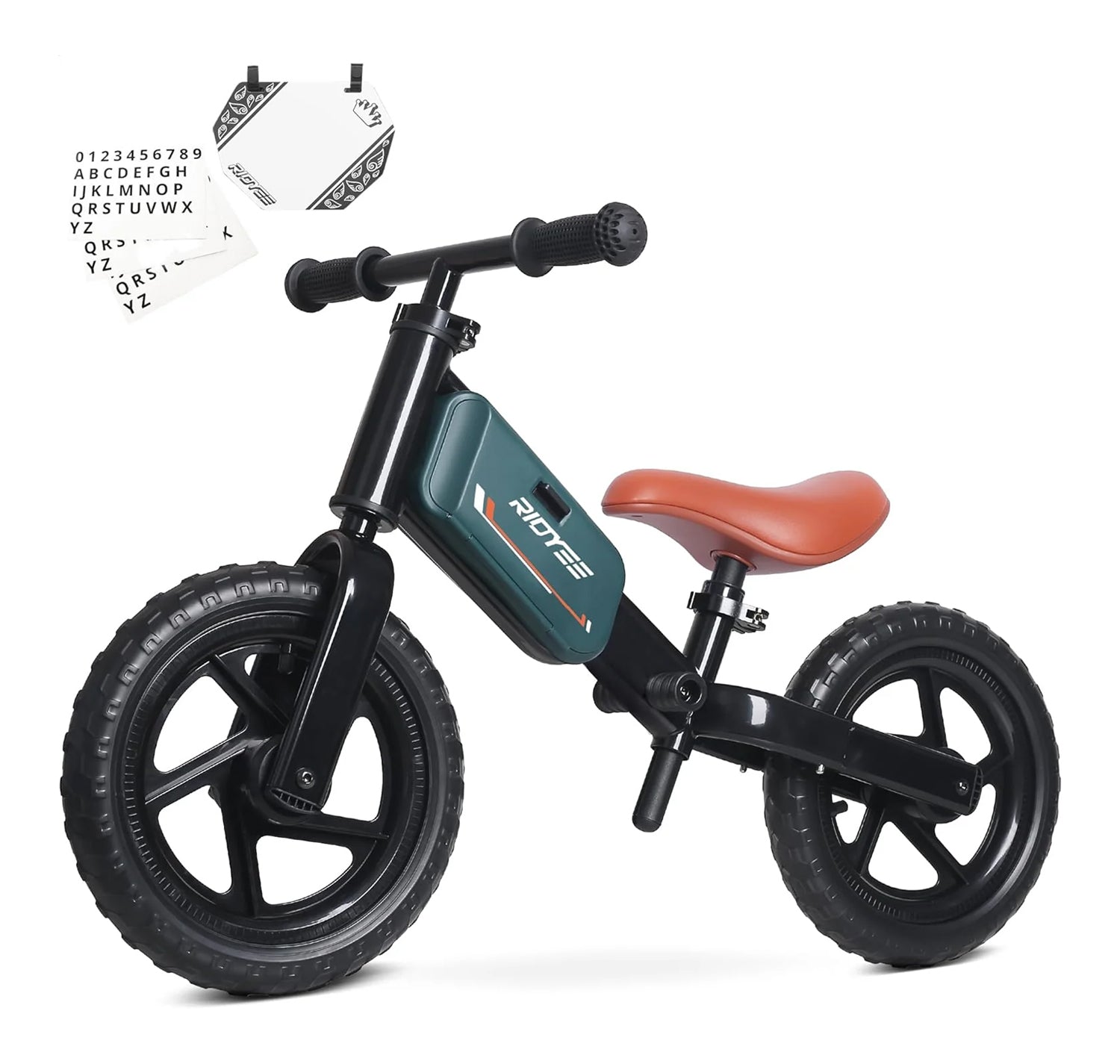
Designed for children ages 2–5, this balance bike combines style, comfort, and safety with features parents appreciate:
- Durable carbon steel frame inspired by off-road bikes
- Tool-free adjustable seat (13.4"–15.8") that grows with your child
- Customizable name plate with letter and number stickers
- Safety steering limiter to help prevent over-rotation
- Shock-absorbing seat and all-terrain tires for smoother rides
- Helps develop balance, coordination, and leg strength indoors or outdoors
It's an excellent first bike for children learning the basics of independent riding.
Step 2: Don't Force It
Honestly, one of the biggest mistakes parents make is expecting immediate success.
If your child seems nervous, don't push them.
Some children hop on immediately, while others spend weeks simply walking beside the bike or sitting on it.
That's completely normal.
Repeated, pressure-free exposure almost always works better than trying to convince a reluctant child to ride.
Step 3: Demonstrate the Basics
Children love copying adults.
Even if you can't actually ride the tiny bike, you can demonstrate the movements.
Show them how to:
- Hold the handlebars
- Sit comfortably on the seat
- Walk while seated
- Keep the handlebars pointed forward
Sometimes seeing the process makes everything click.
Step 4: Start by Walking the Bike
This stage doesn't look like riding—and that's okay.
Most beginners simply sit on the seat while using both feet to walk themselves forward.
They're learning:
- Steering
- Body positioning
- Confidence
- Coordination
Balance comes later.
There's no need to rush.
Step 5: Encourage Looking Ahead
One helpful tip that many parents overlook is teaching children where to look.
Kids naturally want to watch their feet, but balance improves when they look ahead toward where they're going.
Explain that:
- Their feet push the bike forward.
- Looking ahead helps them steer.
- Once they have enough speed, they can try lifting both feet for a short glide.
These small moments of gliding eventually become longer and smoother without much coaching.
Step 6: Practice Gliding
Once your child feels comfortable walking the bike, they'll naturally begin experimenting.
You might notice them lifting one foot for a second.
Then both feet.
Then suddenly they're gliding several feet before touching down again.
A gentle downhill slope can make this stage easier because gravity provides just enough momentum to help children experience balancing.
Choose only very mild slopes with plenty of open space.
Step 7: Teach Safe Braking
Stopping is just as important as going.
Most children naturally use their feet as brakes, and that's exactly how beginners should stop.
Teach them that they should slow down when:
- They're approaching another person.
- They're getting too close to a curb.
- They're going faster than they feel comfortable.
Some balance bikes include hand brakes.
If your child's hands are large and strong enough, teach the rear brake first, then introduce the front brake later.
Extra Tips for Success
Every child learns differently, but these simple strategies often help:
- Keep practice sessions short and fun.
- Celebrate effort instead of distance.
- Ride together whenever possible.
- Let your child set the pace.
- Avoid comparing them to other children.
Remember, learning balance is a process—not a race.
Common Mistakes Parents Should Avoid
When teaching how to use a balance bike, try to avoid these common pitfalls:
Starting with a bike that's too big.
Children should be able to place both feet flat on the ground while sitting.
Holding the bike too much.
It's tempting to steady the bike constantly, but children learn balance by making small corrections themselves.
Practicing on busy sidewalks.
Choose quiet parks, empty parking lots, or smooth playground paths where there are fewer distractions.
Expecting immediate gliding.
Some children glide within days. Others take months. Both timelines are perfectly normal.
When Is a Child Ready for a Pedal Bike?
One of the biggest advantages of balance bikes is how naturally they prepare children for pedal bikes.
Your child is likely ready when they can:
- Glide for several seconds with both feet off the ground
- Steer confidently
- Start and stop independently
- Maintain balance while turning
At that point, adding pedals usually feels much less intimidating because they've already mastered the hardest part.
Final Thoughts
Learning how to use a balance bike doesn't require complicated lessons or constant coaching.
Give your child a safe place to ride, a properly fitted bike, plenty of encouragement, and time to practice. Most children naturally progress from walking to gliding to balancing all on their own.
Some days they'll ride only a few feet. Other days they'll surprise you by cruising across the park with a huge grin on their face.
Those little victories are what make the journey so much fun.
FAQs
What is the best age to start using a balance bike?
Many children begin exploring balance bikes between 18 months and 2 years old, although some toddlers become interested as early as 12 months. The key is choosing a bike that fits properly.
How long does it take to learn a balance bike?
Every child is different. Some learn to glide within a few days, while others may take several weeks or months. Consistent, pressure-free practice usually leads to steady progress.
Do children need training wheels after using a balance bike?
Many children don't. Because they've already learned balancing, transitioning directly to a pedal bike is often much easier than using training wheels.
Should my child wear protective gear?
A properly fitted helmet is essential every time they ride. Knee pads, elbow pads, and gloves are optional but can help nervous beginners feel more confident.
What if my child is afraid of the balance bike?
Take things slowly. Let them become familiar with the bike through play, avoid forcing them to ride, and celebrate every small step. Building confidence is more important than learning quickly.

