

Types of Trikes: A Parent’s Guide to Choosing the Right Tricycle
Aug 21, 2026
The first time a child climbs onto a tricycle, there is usually a moment of pure excitement. They grip the handlebars, push their feet against the pedals, and suddenly realize they can move forward on their own. For many parents, it is one of those small childhood milestones that feels much bigger than expected.
But before that first ride happens, many parents face the same question: which tricycle is actually right for my child?
Walking through a store or browsing online can quickly become overwhelming. There are traditional tricycles, push tricycles, stroller trikes, and convertible models that seem to do almost everything. Each type offers different features, and the best choice depends on your child’s age, confidence level, and how you plan to use it.
Understanding the different types of trikes can make the decision much easier. The right tricycle is not just a toy — it can help children develop balance, coordination, independence, and confidence while making outdoor time more enjoyable.
Before choosing a first tricycle, it helps to understand what makes one suitable for your child and what features matter most.
What to Consider Before Choosing Between Different Types of Trikes

Every family uses a tricycle differently. Some parents want a simple backyard toy for short rides. Others need something that works for neighborhood walks, park trips, and everyday adventures.
Before buying, consider a few important factors:
How will your child use it?
Think about where your child will ride most often.
A lightweight traditional tricycle may be perfect for sidewalks and driveways. A stroller-style trike may work better for families who want longer walks where parents can take control when needed.
Is it comfortable for your child?
Comfort matters more than many parents realize. A child who feels uncomfortable may lose interest quickly.
Look for features such as:
- Adjustable seats that grow with your child
- Comfortable handlebars
- Proper foot support
- A design that matches your child’s size
A tricycle should feel natural, not difficult to control.
Do you need extra features?
Some tricycles are designed to grow with children through multiple stages. Features like folding options, parent handles, storage space, and adjustable parts can make a tricycle more practical for families.
What fits your budget?
Tricycles range from simple models to multi-stage designs with additional features. Think about what your family actually needs rather than paying for features your child may not use.
Choosing a first tricycle is an exciting step, but knowing what to look for can help parents make a confident decision。
Traditional Tricycles: A Classic First Ride for Beginners
When most people picture a tricycle, they imagine the traditional version: three wheels, a seat, handlebars, and pedals.
This familiar design has been loved by generations of children because it is simple, stable, and easy to understand.
Traditional tricycles usually have a wide base and a low center of gravity, which helps young riders feel secure while learning how to pedal and steer.
For many toddlers, this is the first time they experience independent movement. They learn that pushing the pedals moves the wheels, turning the handlebars changes direction, and their own actions control the ride.
Why traditional tricycles work well for beginners
Traditional trikes are especially helpful for children who are learning basic riding skills because:
Three wheels provide extra stability
Children can focus on pedaling without worrying too much about balance
The simple design encourages independent practice
They help build leg strength and coordination
A safe and comfortable first experience can make children more willing to keep practicing. Learning how to ride a tricycle step by step can help parents create a positive introduction to riding.
The biggest advantage of a traditional tricycle is that it lets children feel capable. They are not just sitting on a ride — they are actively making it move.
Push Tricycles: A Bridge Between Stroller and Independent Riding

For younger toddlers who are not ready to pedal independently, push tricycles can be a great option.
A push tricycle includes a parent handle that allows adults to guide the direction and control movement. This makes it similar to a stroller while still introducing children to the experience of sitting on a tricycle.
For children under two, independent pedaling may still be challenging because they are developing strength, coordination, and motor control. A push tricycle allows them to enjoy the experience while gradually building confidence.
How push tricycles support development
As children grow, many push tricycles allow parents to reduce assistance over time.
The transition often looks like this:
- Parent controls steering and movement
- Child begins participating by holding handlebars and using pedals
- Child eventually rides independently
This gradual process can help children develop physical skills without feeling overwhelmed.
Push tricycles can be especially useful for families who enjoy walks but want a product that can adapt as their child becomes more independent.
Stroller Trikes: A Multi-Stage Option That Grows With Your Child
Among the different types of trikes, stroller trikes are becoming increasingly popular with parents who want one product that can support several stages of childhood.
A stroller trike starts out looking much like a stroller. It often includes features such as:
- A parent push handle
- Safety harnesses
- Footrests
- A canopy for shade
As children grow, parents can remove certain features and allow children to take more control.
Early stage
Parents guide the ride while children enjoy sitting comfortably.
Common features include:
- Parent-controlled steering
- Safety straps
- Foot support
Middle stage
Children begin participating more actively.
Some accessories may be removed while children practice pedaling and steering.
Later stage
The tricycle becomes a fully independent riding toy.
Children control:
- Pedaling
- Steering
- Direction
This type of tricycle can be appealing for families who want long-term value. Instead of buying a stroller first and a tricycle later, one adaptable product can support different stages from toddlerhood through early childhood.
8-in-1 Convertible Toddler Tricycle with Canopy
The 8-in-1 Convertible Toddler Tricycle with Canopy is designed for children ages 1.5–5 years old. It can gradually transform from a parent-controlled stroller trike into an independent riding tricycle, helping children build confidence at their own pace.
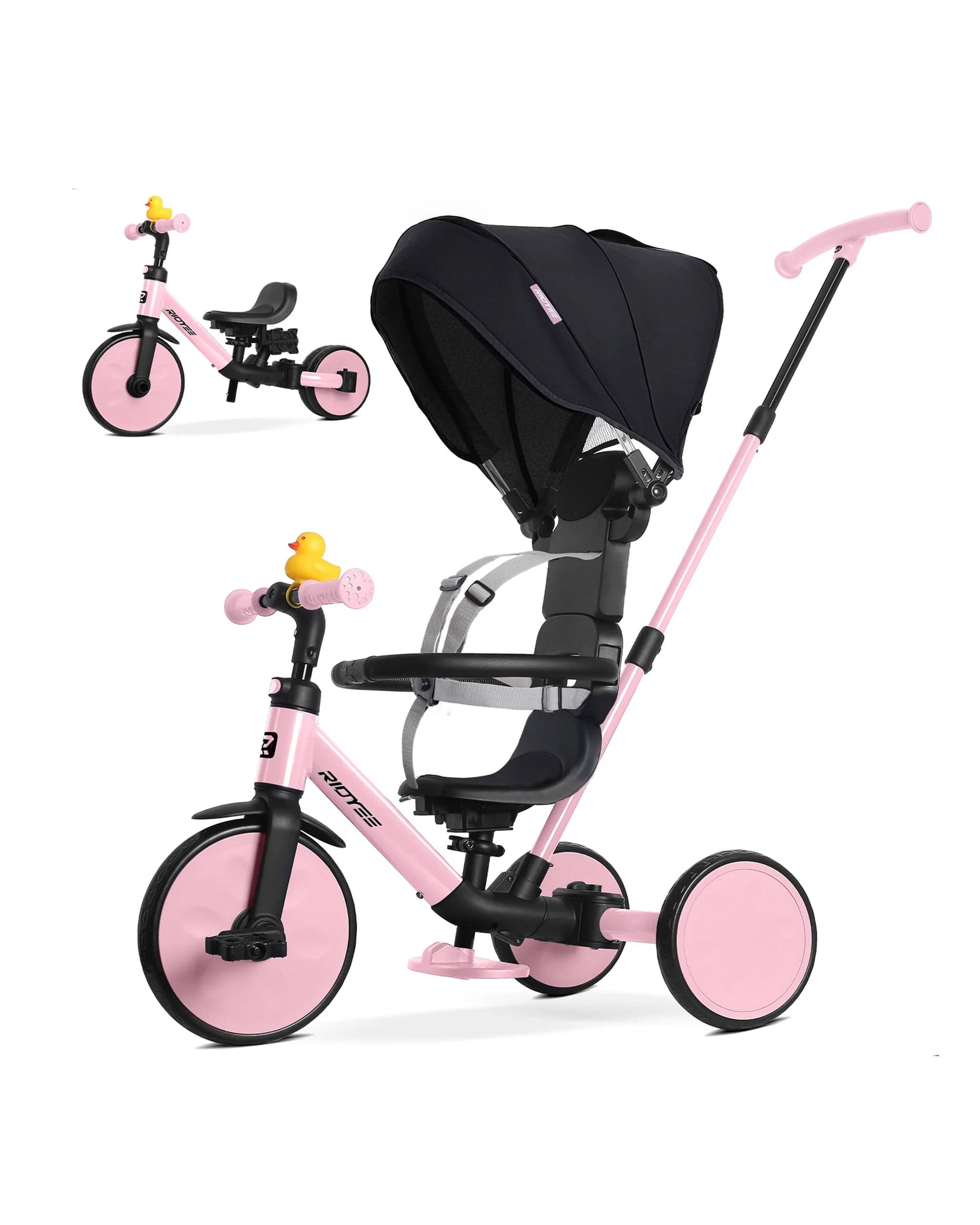
Key features include:
- 8-in-1 convertible design: Adjusts through different riding stages, from parent-guided rides to independent cycling, making it suitable as children develop new skills.
- Parent-controlled steering system: The convenient clutch system allows parents to guide direction when children are younger and switch to independent control when they are ready.
- Adjustable parent handle: The two-height adjustable push handle helps parents of different heights comfortably control the tricycle during walks.
- Convertible footrest system: Removable pedals and built-in footrests provide better support for younger toddlers while allowing older children to transition into independent pedaling.
- Flexible seat options: The 180° rotating seat allows parents to adjust the riding position for better interaction and comfort.
- Multiple safety features: A high-back seat, removable safety bar, and adjustable three-point or five-point harness options provide additional support during different stages.
- Large canopy with viewing window: The extended canopy helps protect children from the sun, while the mesh window improves airflow and allows parents to easily check on their child.
This type of adaptable design makes it a useful option for families who want one tricycle that can continue supporting their child’s growth.
How to Choose the Best Type of Trike for Your Child
The best tricycle is not necessarily the one with the most features. It is the one that matches your child’s current abilities and your family’s lifestyle.
A younger toddler may benefit from a push tricycle that provides support. A more independent child may enjoy a traditional tricycle that allows them to explore on their own.
Pay attention to your child’s reactions.
Are they excited to ride? Do they feel comfortable? Are they gaining confidence?
Those moments matter more than having the most advanced model.
A tricycle should encourage curiosity and movement. It should make children want to go outside, practice new skills, and enjoy the feeling of independence.
Frequently Asked Questions About Types of Trikes
1. What age is best for a child to start using a tricycle?
Many children are ready for a tricycle between ages 1.5 and 3, depending on their coordination and confidence. A push tricycle can work well for younger toddlers who are still developing riding skills.
2. Are traditional tricycles better than push tricycles?
Neither option is always better. Traditional tricycles are great for independent riders, while push tricycles provide extra support for younger children.
3. Can a convertible tricycle replace a stroller?
For some families, yes. Multi-stage stroller trikes can work as both a stroller alternative and a riding toy, especially during the toddler years.
4. What features should parents look for in a toddler tricycle?
Parents should consider safety features, comfort, adjustability, and how long the tricycle can grow with their child. A comfortable design often keeps children more interested in riding.
5. How do I know which type of trike my child needs?
Think about your child’s age, confidence level, and independence. The best choice is the one that supports where your child is now while allowing room for growth.

