

First Tricycle: What Parents Should Actually Know Before Buying One
Jun 01, 2026
The first time my toddler climbed onto a tricycle, nothing really happened.
No magical movie moment. No perfect ride across the driveway.
He pushed backward instead of forward, got frustrated after about thirty seconds, then randomly started ringing the bell like he had accomplished something huge.
Honestly? He kind of had.
Because a first tricycle isn’t really about riding perfectly. It’s about independence. Confidence. That tiny moment when a little kid realizes, “Wait… I can move myself.”
And for a lot of toddlers, that feeling is a very big deal.
If your child isn’t quite ready for a regular bike yet, starting with a kids' tricycle can be one of the easiest ways to encourage outdoor play without putting too much pressure on them. Most kids treat it less like “exercise” and more like freedom.
Which is probably why tricycles have survived generation after generation without really disappearing.
Why a first tricycle matters more than parents expect

At first glance, a tricycle just looks like a smaller bike with an extra wheel.
But developmentally, a first tricycle introduces toddlers to several new skills all at once:
- Steering
- Pedaling
- Spatial awareness
- Coordination
- Independence
- Confidence outdoors
And because tricycles feel stable, many kids are willing to experiment without the fear that sometimes comes with balance bikes or bicycles.
That stability matters.
Especially for cautious toddlers.
Some children hop on immediately. Others spend weeks slowly figuring things out. Honestly, both are normal.
The different types of toddler tricycles
One thing that surprises parents is how many versions of toddler tricycles now exist.
It’s definitely not just the classic metal trike from decades ago anymore.
Classic tricycles
This is probably what most parents picture first.
Simple frame. Three wheels. Pedals. Basic steering.
Classic tricycles are usually ideal for kids around ages 2–5 who are ready to learn simple riding skills without extra features distracting them.
And honestly? There’s something nice about the simplicity.
No complicated transformations. No giant instruction manual. Just straightforward riding fun.
For confident toddlers, sometimes that’s enough.
Push tricycles
Push tricycles include a parent handle so adults can help steer or push when little legs get tired.
These can be incredibly useful during walks, especially for younger toddlers still learning how pedaling works.
But parents should know something important: not all push handles steer equally well.
Some handles fully control direction, while others mainly provide pushing support. That difference becomes very obvious during longer walks or crowded sidewalks.
You don’t really think about steering mechanics until you’re awkwardly trying to turn a tricycle around a tight corner with one hand while holding a snack in the other.
Stroller trikes
This is where things start blending together between stroller and tricycle.
For younger toddlers — especially around 18 months old — stroller trikes can make outdoor walks much more enjoyable because children feel more involved in the ride instead of simply sitting passively like they do in a traditional stroller.
Most stroller trikes include:
- Parent push handles
- Safety harnesses
- Footrests
- Canopies
- Storage baskets
- Reclined or supportive seating
And honestly, for toddlers who get bored sitting in strollers, switching to a stroller trike sometimes completely changes outdoor walks.
Some parents looking for the best stroller trike that actually makes life easier end up realizing the convenience matters just as much as the riding itself.
Because once toddlers think they’re “helping” move the ride, walks suddenly become far less dramatic.
Sometimes.
Not always, obviously.
A first tricycle that grows with your child
One challenge with buying a first tricycle is how quickly toddlers outgrow things.
Something that works perfectly at 18 months may suddenly feel too small or too limited a year later.
That’s why convertible designs have become so popular with parents recently.
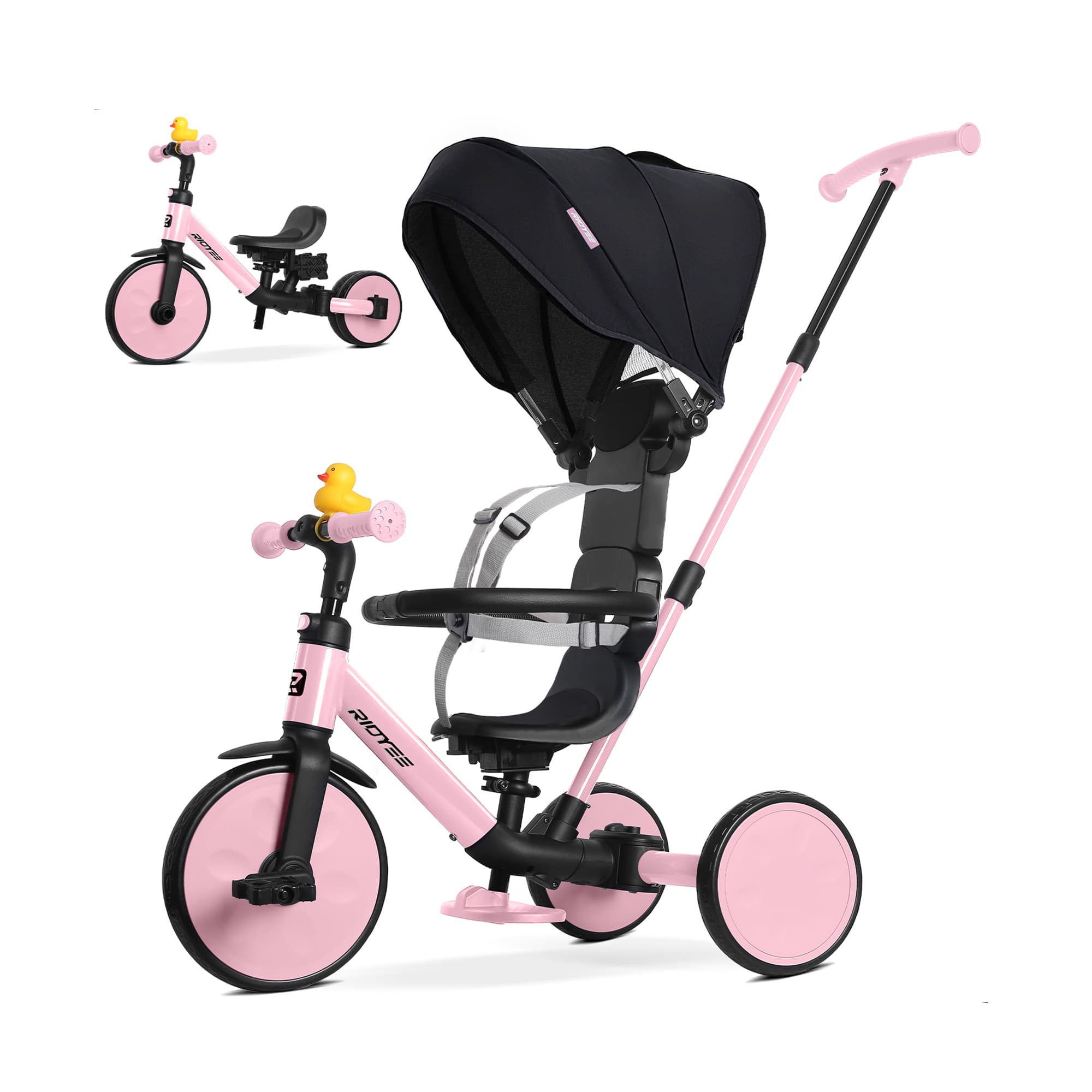
Convertible Toddler Tricycle with Canopy
One standout option is the Convertible Toddler Tricycle with Canopy, especially for families trying to avoid buying multiple riding toys within a short period.
What makes it interesting is the way it changes alongside a child’s development stages.
Price: $99.99
It functions as:
- A parent-guided infant trike
- A toddler training trike
- An independent tricycle
- Even a balance bike later on
And honestly, the balance bike conversion is what catches many parents’ attention because it helps bridge that constant “balance bike vs tricycle” debate families seem to have.
A few features parents tend to appreciate:
- Tool-free transitions between stages
- Adjustable push handle heights
- Adjustable seat and handlebars
- Convertible footrests for younger toddlers
- 180° rotating seat
- Five-point and three-point harness options
- Large canopy with mesh viewing window
The rotating seat is especially useful for younger toddlers who still want eye contact with parents during walks. Then later, kids can face forward once they become more independent riders.
It’s one of those small features that sounds unnecessary until you actually use it.
Another flexible option for growing toddlers
Some families want even more versatility from a first tricycle, especially if they plan to use it heavily over several years.
7 in 1 trike stroller is designed for children roughly 1.5 to 5 years old and includes seven different riding modes depending on age and development.
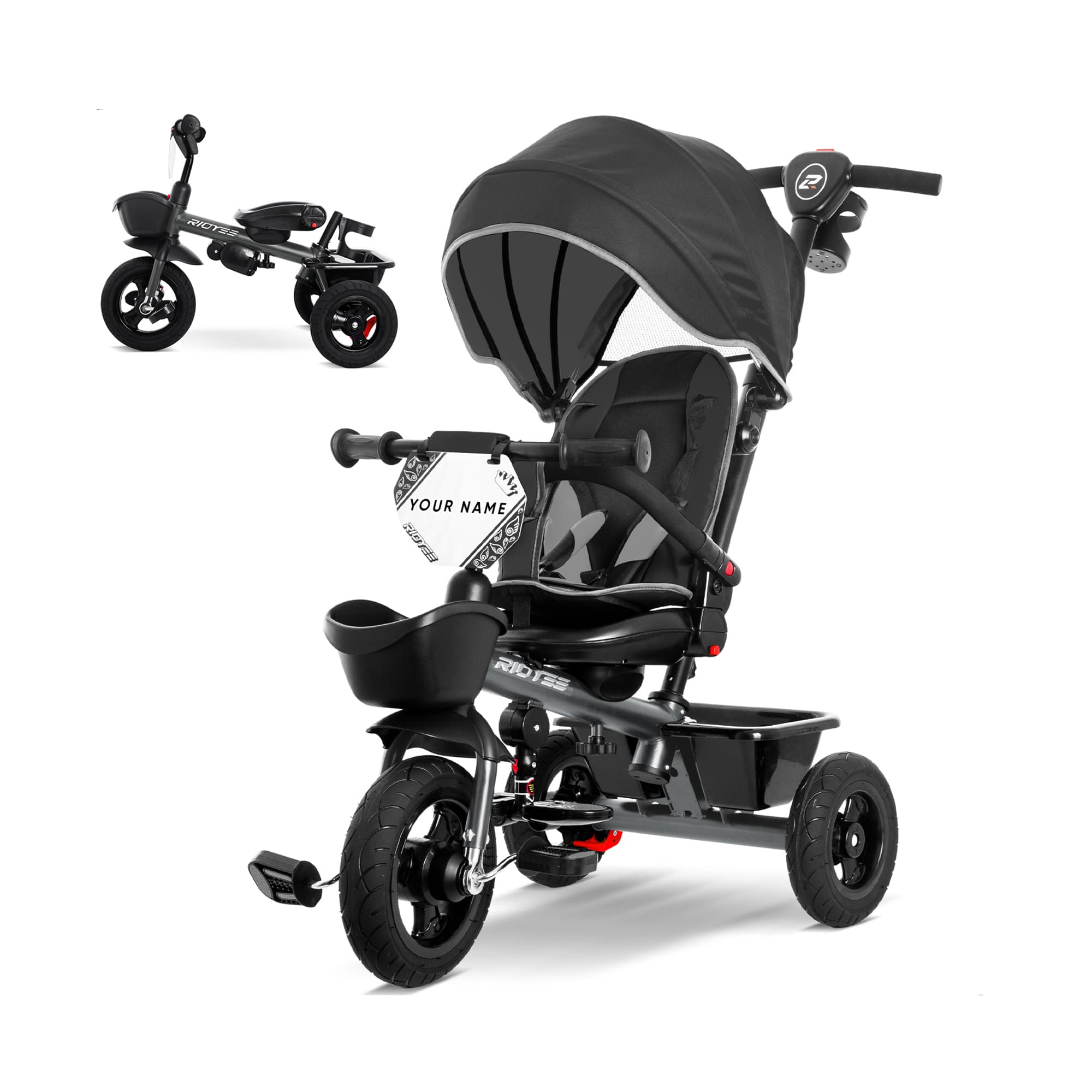
The seat also rotates 360 degrees and adjusts for different heights, which helps extend usability as kids grow.
And honestly, toddlers usually love the customizable stickers.
Parents care about safety systems.
Kids care about decorating things.
That’s just reality.
Additional features include:
- Three-point safety harness
- Dual rear braking system
- Extendable canopy
- Rear viewing window
- Removable guardrail
- Foldable footrests
- All-terrain tires for smoother outdoor rides
The all-terrain wheels especially help if your family spends a lot of time on uneven sidewalks, parks, or neighborhood paths instead of perfectly smooth pavement.
The real benefits of a first tricycle
Parents often focus on the riding part first.
But toddlers are actually learning much more underneath the surface.
Coordination and balance
Even though tricycles are more stable than bikes, toddlers still practice important movement patterns:
- Pedaling rhythm
- Steering control
- Body coordination
- Spatial awareness
These early physical skills build confidence before children eventually transition to bikes later.
Safety awareness
This part develops gradually.
Children start noticing obstacles, learning how to turn carefully, slow down, and pay attention to surroundings.
Honestly, watching toddlers suddenly become aware of “traffic” on the sidewalk is both impressive and slightly terrifying.
Confidence
This might be the biggest benefit of all.
There’s something powerful about independent movement for toddlers.
The moment they successfully pedal forward on their own, many kids immediately want to keep trying. Even cautious children often become noticeably more confident once they feel physically capable outdoors.
Exploration and independence
A first tricycle gives toddlers controlled freedom.
They choose where to go. They decide how fast to move. They explore their environment independently while still staying close to parents.
And for little kids, that balance between freedom and safety feels enormous.
Choosing the right first tricycle for your child

Others need the comfort and support of stroller-style designs first.
The best first tricycle usually depends on:
- Your child’s age
- Confidence level
- Coordination skills
- Outdoor environment
- How long you hope to use it
- Whether parent steering matters to you
And sometimes personality matters most of all.
Some kids want speed immediately.
Others spend ten minutes inspecting the wheels before even sitting down.
Both count as progress.
FAQs About Buying a First Tricycle
What age is best for a first tricycle?
Many toddlers start around 18 months to 2 years old, especially with stroller-style trikes. Traditional tricycles often work better closer to age 2 or 3.
Is a tricycle better than a balance bike?
It depends on the child. Tricycles offer more stability and confidence for beginners, while balance bikes focus more directly on balance and steering skills.
Are stroller trikes worth it?
For many families, yes. They can make long walks easier while giving toddlers more engagement and independence compared to regular strollers.
How do I know if my toddler is ready for a tricycle?
If your child enjoys outdoor movement, can sit steadily, and shows interest in pushing or steering toys, they’re probably ready to start exploring a first tricycle.
What features matter most in a toddler tricycle?
Safety harnesses, adjustable sizing, steering control, durable wheels, and comfort features usually matter most — especially if you plan to use the tricycle for several years.

